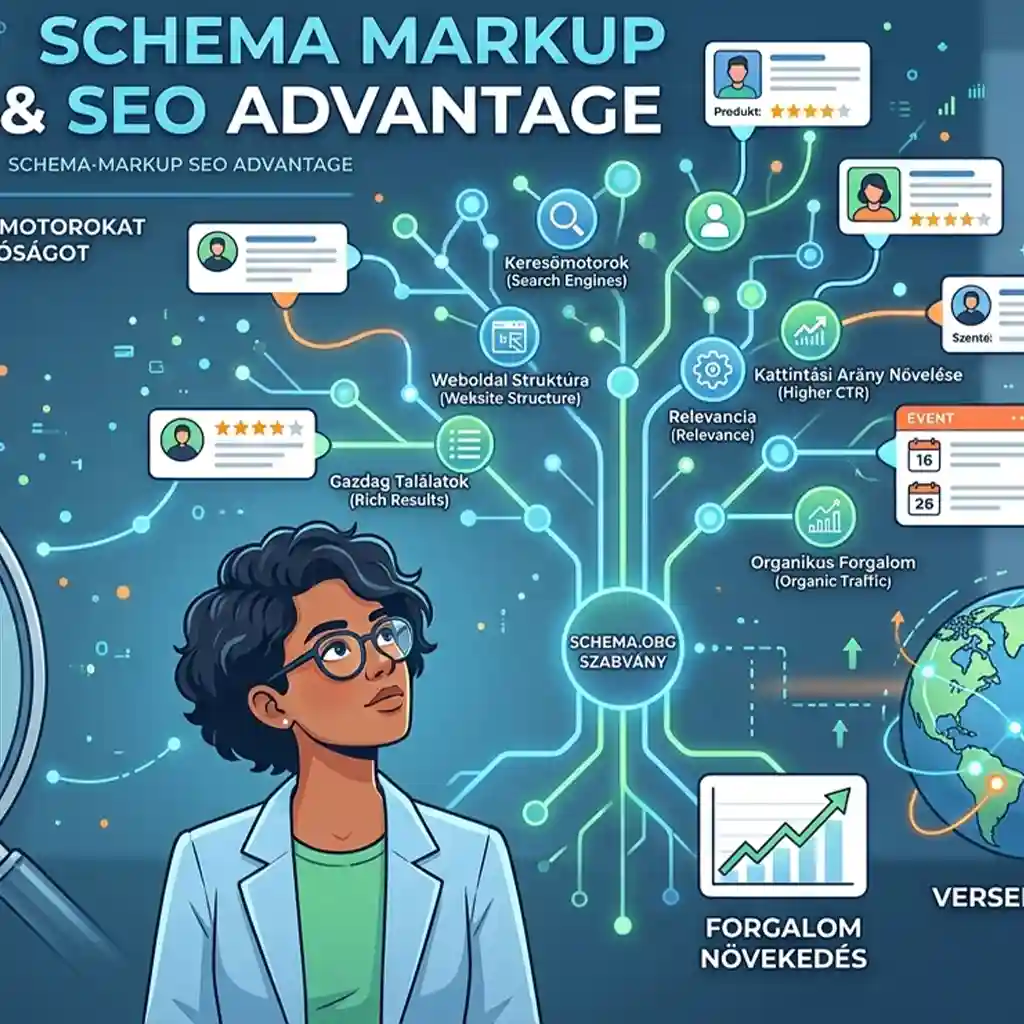
Schema Markup Mastery: The Invisible SEO Advantage
June 11, 2026
The Hidden Power of Structured Data
Every day, your competitors are losing potential customers to businesses that appear more prominently in search results—not because they have better content, but because they’ve mastered an invisible SEO advantage: schema markup. This structured data language helps search engines understand your content context, transforming ordinary search listings into eye-catching rich snippets that command attention and clicks. While 58% of marketers invest in SEO, fewer than 30% properly implement schema markup, creating a significant opportunity for businesses willing to embrace this technical edge.
Schema markup is essentially a vocabulary of tags that you add to your HTML to improve how search engines read and represent your page in search results. Think of it as providing search engines with a detailed map of your content, rather than making them guess what your page is about. When implemented correctly, schema markup can increase click-through rates by 30-45%, improve voice search visibility, and position your business for featured snippets and knowledge graph inclusion.
For business owners and decision-makers, understanding schema markup isn’t just a technical nicety—it’s a competitive necessity. This guide will walk you through everything you need to know about structured data implementation, from basic concepts to advanced strategies that can transform your digital visibility.
Essential Schema Types Every Business Needs
Not all schema markup is created equal, and the types you implement should align with your business model and content strategy. The most impactful schema types for businesses include Organization schema, which establishes your brand identity in search engines, and LocalBusiness schema, which is critical for companies with physical locations seeking local search visibility. Product and Review schemas are essential for e-commerce operations, as they enable star ratings and pricing information to appear directly in search results.
FAQ schema has become increasingly valuable, particularly as Google expands FAQ rich results across more queries. This schema type allows your frequently asked questions to appear as expandable sections directly in search results, dramatically increasing your real estate on the search engine results page. Similarly, HowTo schema structures instructional content in a way that can earn featured snippet positions, positioning your business as an authoritative resource.
The key schema types to prioritize include:
- Organization Schema: Establishes brand identity, logo, social profiles, and contact information
- LocalBusiness Schema: Critical for local SEO with address, hours, and service area details
- Product Schema: Displays pricing, availability, and ratings in search results
- Review/AggregateRating Schema: Shows star ratings that increase CTR by 35%
- FAQ Schema: Expands your search result footprint with question-answer pairs
- BreadcrumbList Schema: Improves site navigation visibility in search results
- Article Schema: Helps content qualify for Top Stories and rich result features
Implementation Methods: JSON-LD vs. Microdata vs. RDFa
Three primary formats exist for implementing schema markup: JSON-LD, Microdata, and RDFa. However, Google explicitly recommends JSON-LD (JavaScript Object Notation for Linked Data) as the preferred format. JSON-LD offers significant advantages—it’s easier to implement, doesn’t interfere with your page’s HTML structure, and can be dynamically generated without touching your content markup. This separation of concerns makes maintenance simpler and reduces the risk of implementation errors.
JSON-LD code is typically placed in the <head> or <body> section of your HTML as a script tag with type=”application/ld+json”. For example, a basic Organization schema might look like a structured object defining your company name, URL, logo, and contact information. The beauty of JSON-LD is that it doesn’t require you to mark up visible content—you’re simply providing a data layer that search engines can parse independently.
For businesses using content management systems, implementation becomes even simpler. WordPress users can leverage plugins that automatically generate schema markup based on your content, while Shopify and Magento platforms often include built-in schema support that can be extended through custom development. The critical factor is ensuring your implementation is accurate, complete, and includes all required properties for your chosen schema types.
Validation and Common Implementation Mistakes
Implementing schema markup is only half the battle—validation is equally critical. Google’s Rich Results Test and Schema Markup Validator are essential tools that show you exactly how search engines interpret your structured data. These tools identify errors, warnings, and opportunities for improvement before your markup goes live. A common mistake is deploying schema markup without validation, only to discover months later that errors prevented rich results from appearing.
The most frequent schema implementation mistakes include missing required properties, incorrect data types, and conflicting markup from multiple sources. For instance, Product schema requires specific properties like name, image, and offers—omitting any of these prevents rich results from displaying. Another critical error is implementing review schema for self-reviews rather than genuine customer reviews, which violates Google’s guidelines and can result in manual penalties.
Dynamic schema generation presents unique challenges, particularly for e-commerce catalogs with thousands of products. The solution involves programmatically generating schema markup based on your product database, ensuring consistency across your entire catalog. This approach requires technical expertise but delivers scalable results that manual implementation simply cannot match. Working with experienced developers who understand both your CMS platform and schema requirements ensures proper implementation that delivers measurable results.
Advanced Strategies: Multi-Type Entities and Nested Schemas
Once you’ve mastered basic schema implementation, advanced techniques can further amplify your search visibility. Multi-type entities allow you to combine multiple schema types on a single page—for example, an Article that includes a HowTo section, author information with Person schema, and an embedded video with VideoObject schema. This comprehensive markup provides search engines with rich context that can unlock multiple rich result opportunities from a single page.
Nested schemas represent another powerful technique, particularly for complex content. An Event schema might nest an Organization schema for the event host, a Place schema for the venue, and an Offer schema for ticketing information. This hierarchical structure mirrors real-world relationships and helps search engines understand the complete context of your content. The key is maintaining logical relationships and avoiding redundant or conflicting information.
For businesses serious about maximizing their schema markup advantage, professional implementation ensures you’re not just checking boxes but strategically leveraging structured data for competitive advantage. This includes ongoing monitoring of rich result performance, adapting to new schema types as they emerge, and optimizing based on actual search appearance data from Google Search Console.
Measuring Impact and Continuous Optimization
The true value of schema markup becomes apparent when you measure its impact on your search performance. Google Search Console’s Performance report allows you to filter by search appearance types, showing exactly how often your pages appear with rich results and how those appearances affect click-through rates. Case studies consistently demonstrate that pages with rich snippets achieve 30-45% higher CTR compared to standard listings, translating directly to increased traffic without additional ad spend.
One retail client experienced a 45% CTR improvement after implementing comprehensive Product and Review schema across their e-commerce catalog. Their search impressions remained relatively stable, but clicks increased dramatically as star ratings and pricing information made their listings more compelling. This improvement occurred within 4-6 weeks of implementation, demonstrating that schema markup delivers relatively quick returns compared to other SEO strategies.
Continuous optimization involves monitoring which schema types generate the most valuable traffic, expanding implementation to additional pages, and staying current with Google’s evolving rich result guidelines. Search engines regularly introduce new schema types and rich result formats—businesses that quickly adopt these innovations gain first-mover advantages in search visibility. The investment in proper schema markup implementation pays dividends through sustained improvements in organic search performance.
Transform Your Search Visibility with Structured Data
Schema markup represents one of the most underutilized yet powerful SEO strategies available to businesses today. While your competitors continue to overlook this invisible advantage, implementing comprehensive structured data can transform your search presence, increase click-through rates, and position your business for emerging search technologies like voice assistants and AI-powered search experiences. The technical nature of schema implementation shouldn’t deter you—the competitive advantages are too significant to ignore.
The businesses winning in search results aren’t necessarily those with the most content or the biggest budgets—they’re the ones providing search engines with the clearest signals about their content value and relevance. Schema markup is that signal, and mastering it requires both technical precision and strategic thinking about how your content should appear in search results.
Ready to unlock the invisible SEO advantage that’s transforming how businesses appear in search results? Professional implementation of schema markup requires expertise in both technical SEO and your specific platform. Discover how comprehensive digital services can implement structured data strategies that drive measurable improvements in your search visibility and business results. Don’t let your competitors continue winning clicks with an advantage you could easily claim for your own business.