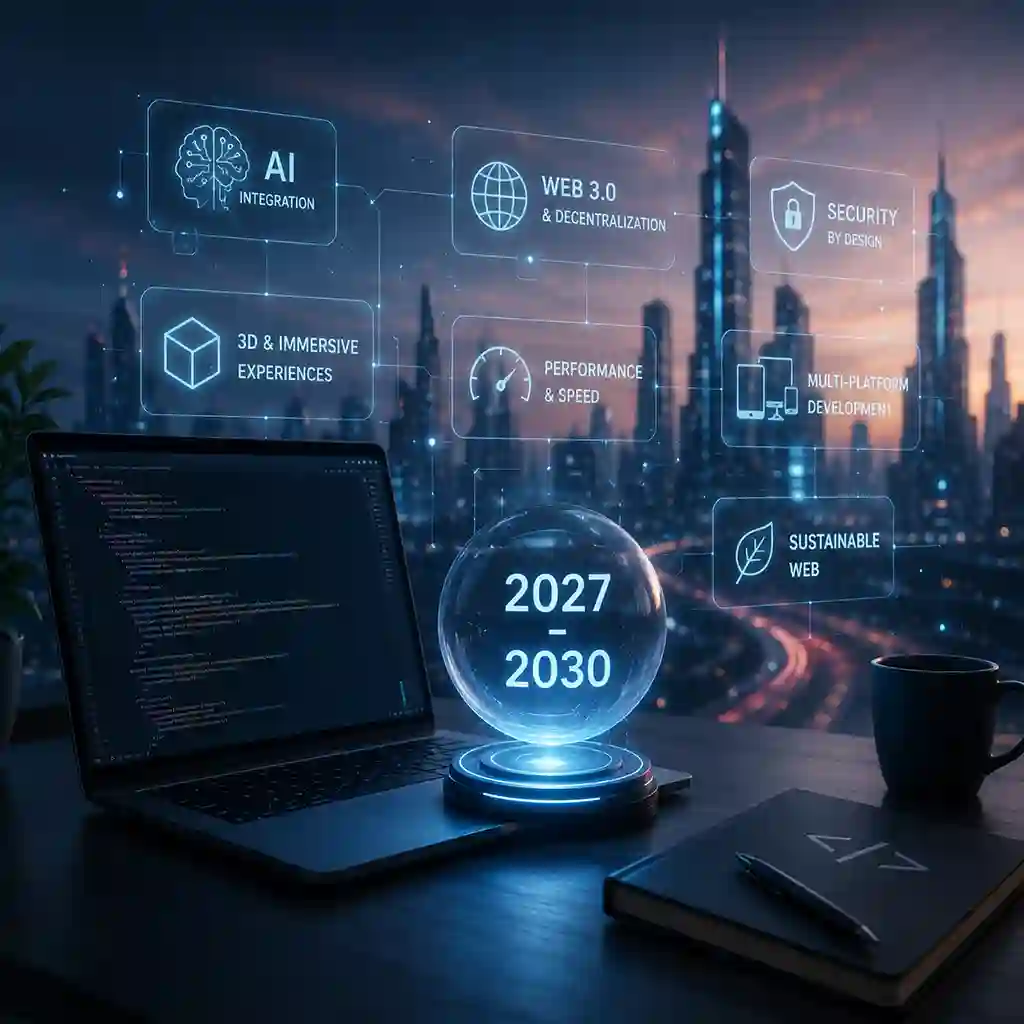
The Future of Web Development: What Changes in 2027-2030
June 9, 2026
Introduction: The Web Development Revolution Ahead
The digital landscape is evolving faster than ever, and web development stands at the precipice of transformative change. As we look toward 2027-2030, business leaders must understand that the websites and digital platforms they invest in today will need to adapt to radically different technologies tomorrow. The convergence of artificial intelligence, edge computing, and next-generation web standards is reshaping how we build, deploy, and optimize digital experiences. For CEOs and digital directors making strategic technology decisions, understanding these emerging trends isn’t optional—it’s essential for maintaining competitive advantage and ensuring your digital investments remain future-proof.
Emerging Technologies Reshaping Web Performance
WebAssembly (Wasm) is transitioning from experimental technology to mainstream adoption, enabling near-native performance directly in browsers. By 2027, we’ll see WebAssembly powering complex business applications that previously required native apps, from advanced data visualization tools to real-time collaboration platforms. This shift means your web applications can deliver desktop-like performance without sacrificing cross-platform compatibility. Edge computing combined with 5G networks will fundamentally change how we architect web applications, moving processing closer to users and reducing latency to near-zero levels. This distributed architecture approach will be particularly transformative for global businesses serving customers across multiple regions.
Web3 integration, while still evolving, will mature into practical business applications beyond cryptocurrency. Decentralized identity management, transparent supply chain tracking, and blockchain-verified transactions will become standard features for enterprise applications. The key for business leaders is distinguishing between hype and genuine utility—focusing on Web3 features that solve real business problems rather than adopting technology for technology’s sake. Organizations investing in strategic digital services today should ensure their technology partners understand these emerging paradigms and can architect solutions with future scalability in mind.
The 5G and Edge Computing Impact
The widespread adoption of 5G networks will eliminate many current performance constraints, but it also raises user expectations exponentially. Websites that load in under two seconds today will need to deliver content in milliseconds by 2030. Edge computing infrastructure will become the standard deployment model, with content and computation distributed across global edge networks rather than centralized servers. This shift requires rethinking traditional hosting models and embracing platforms that automatically distribute workloads. Business leaders should evaluate their current infrastructure partnerships and ensure they’re working with providers who are investing heavily in edge capabilities and can scale with these technological shifts.
AI-Powered Development and Automation
Artificial intelligence will fundamentally transform the web development process itself by 2027-2030. AI-powered code generation tools will evolve from simple autocomplete to sophisticated systems that can build entire feature sets from natural language descriptions. This doesn’t mean developers become obsolete—instead, their role shifts toward architectural decision-making, quality assurance, and creative problem-solving. For businesses, this means faster development cycles, reduced costs, and the ability to iterate more rapidly on digital products. Intelligent debugging systems will automatically identify and often fix issues before they impact users, dramatically improving reliability.
Design-to-code automation will mature significantly, with AI systems capable of converting design mockups into production-ready, accessible, and performant code. This bridges the traditional gap between design and development teams, accelerating time-to-market for new features and products. Businesses leveraging AI-powered automation will gain substantial competitive advantages through reduced development overhead and improved consistency. The most forward-thinking organizations are already experimenting with these tools, building internal expertise that will become critical as these technologies mature.
AI-Generated Interfaces and Personalization
Beyond development tools, AI will power dynamically generated user interfaces that adapt in real-time to individual user needs, preferences, and contexts. Imagine websites that automatically reorganize navigation, adjust content density, or modify interaction patterns based on user behavior and accessibility needs. This level of personalization will become table stakes for competitive digital experiences. Machine learning models will analyze user sessions to continuously optimize conversion paths, content presentation, and feature prioritization—all without manual intervention from your team.
Framework Evolution and Architecture Patterns
The JavaScript framework landscape will continue evolving, with React Server Components, Astro, and Qwik representing the future direction of web development. These frameworks prioritize performance through innovative patterns like partial hydration, resumability, and server-first rendering. For business decision-makers, this means working with development partners who stay current with these technologies rather than relying on legacy approaches. The death of jQuery and other legacy technologies is accelerating, with modern alternatives offering superior performance, security, and developer productivity.
Component-driven development and comprehensive design systems will become universal standards rather than best practices. This approach ensures consistency across digital properties, reduces development time for new features, and creates maintainable codebases that can evolve with your business. Organizations should invest in establishing robust design systems now, as they’ll become foundational to efficient development in the coming years. Headless CMS platforms and API-first architectures will reach full maturity, enabling omnichannel content delivery and unprecedented flexibility in how you present information across devices and platforms.
Sustainability and Accessibility as Core Requirements
Green web development will transition from nice-to-have to business imperative as both regulations and consumer expectations demand sustainable digital practices. This means optimizing for energy efficiency, reducing data transfer, and choosing hosting providers powered by renewable energy. Websites will be evaluated not just on performance and conversion metrics, but on their carbon footprint. Accessibility-first design will become legally mandated in more jurisdictions and culturally expected everywhere, with WCAG compliance treated as a baseline rather than an achievement.
Dark mode will become standardized across all digital properties, with users expecting seamless theme switching and consistent experiences. Minimalist design trends will continue dominating, driven partly by performance considerations and partly by user preference for clean, focused interfaces. These aren’t merely aesthetic choices—they directly impact user engagement, conversion rates, and brand perception. Businesses should audit their current digital properties against these emerging standards and develop roadmaps for bringing everything up to future expectations.
Preparing Your Business for the Future
Business leaders should take concrete steps today to prepare for these coming changes. First, audit your current technology stack and identify legacy dependencies that will become liabilities. Second, establish relationships with development partners who demonstrate expertise in emerging technologies and maintain active learning cultures. Third, invest in modular, API-driven architectures that can evolve incrementally rather than requiring complete rebuilds. Fourth, prioritize performance, accessibility, and sustainability in all digital initiatives—these will only become more critical.
The job market for web developers will shift dramatically, with premium value placed on those who understand AI integration, performance optimization, and modern architecture patterns. For agencies and in-house teams, continuous learning and experimentation with emerging technologies is essential. Consider establishing innovation budgets specifically for exploring new frameworks, tools, and approaches. Review your digital portfolio regularly through the lens of future readiness—examining our portfolio of high-performance solutions can provide insight into what future-ready digital properties look like today.
Conclusion: Strategic Action for Digital Leaders
The future of web development between 2027-2030 promises unprecedented capabilities but demands strategic preparation today. WebAssembly, edge computing, AI automation, and evolving frameworks will fundamentally change how we build and deploy digital experiences. Business leaders who understand these trends and invest accordingly will gain significant competitive advantages, while those who ignore them risk digital obsolescence. The key is balancing innovation with pragmatism—adopting emerging technologies that solve real business problems while maintaining stable, performant digital operations. Start by evaluating your current digital infrastructure against these future trends, identify gaps, and develop a roadmap that positions your organization to leverage these technologies as they mature. The future of web development is being built today, and the decisions you make now will determine whether your digital presence leads or follows in the years ahead.