Zero-Click Content Strategy: Winning Google’s Answer Boxes
July 21, 2026
The Zero-Click Search Revolution: A New SEO Reality
The digital landscape has fundamentally shifted. Today, more than 50% of Google searches end without a single click to a website. This phenomenon, known as zero-click search, occurs when Google displays answers directly in the search results through featured snippets, knowledge panels, and answer boxes. For business owners and decision-makers, this represents both a significant challenge and an unprecedented opportunity to dominate search visibility.
Traditional SEO focused exclusively on driving clicks to your website. However, the modern approach requires optimizing for featured snippets—those coveted “position zero” placements that appear above all organic results. While this may seem counterintuitive to reducing traffic, capturing featured snippets dramatically increases brand authority, establishes thought leadership, and ensures your business becomes the trusted answer source in your industry.
Understanding how to adapt your content strategy for zero-click optimization isn’t just about keeping pace with Google’s evolution—it’s about positioning your brand as the definitive expert when your potential customers are actively seeking solutions. The companies that master this strategy will dominate their market’s digital mindshare, regardless of whether users click through immediately.
Understanding Featured Snippet Types and Opportunities
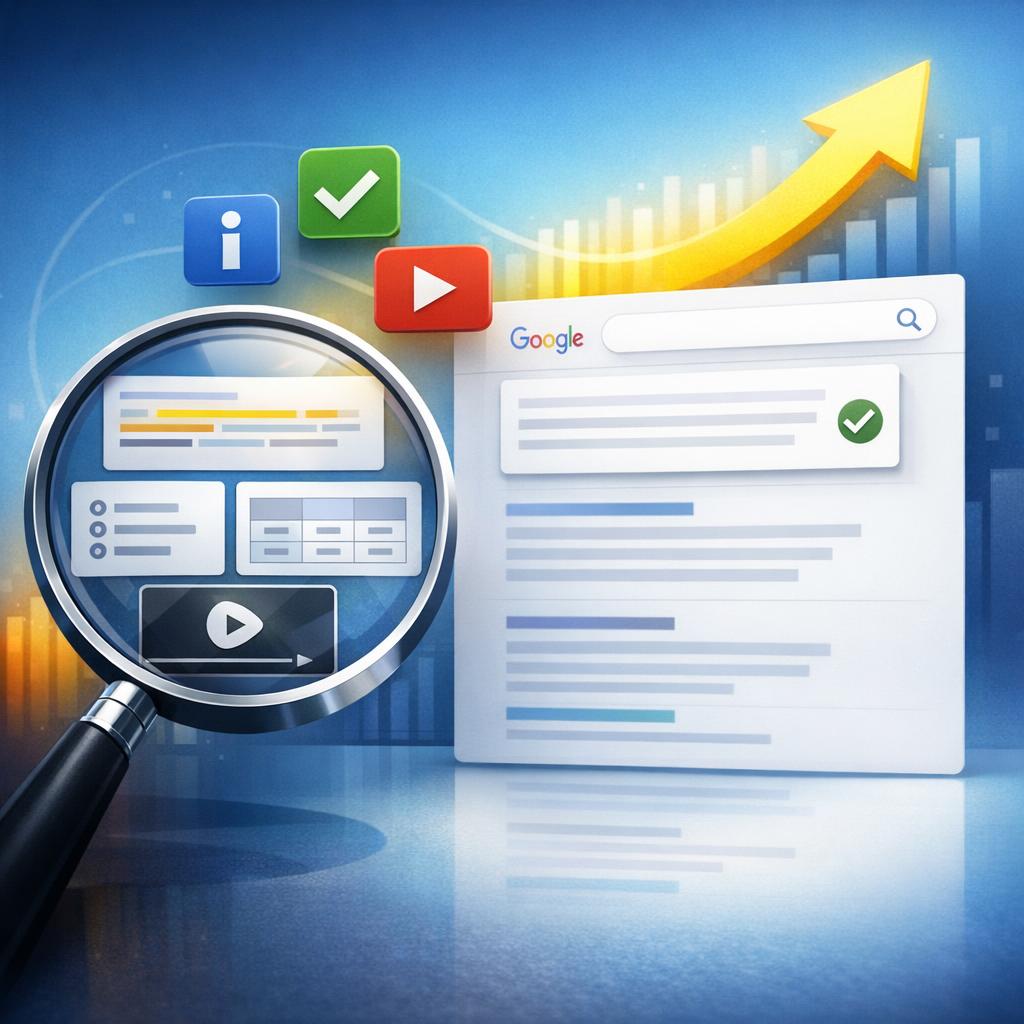
Google displays several distinct types of featured snippets, each requiring specific optimization approaches. Paragraph snippets typically answer “what is” or “why” questions with 40-60 word concise definitions. List snippets showcase step-by-step processes or ranked items, perfect for “how to” queries and comparison searches. Table snippets organize data comparatively, ideal for pricing, specifications, or feature comparisons. Video snippets increasingly dominate for tutorial and demonstration content.
The key to capturing these positions lies in understanding search intent and structuring your content accordingly. Each snippet type serves different user needs and query patterns. Successful optimization requires identifying which snippet formats align with your target keywords and crafting content that matches Google’s preferred structure for those specific queries.
Strategic Keyword Research for Snippet Opportunities
Not all keywords present equal snippet opportunities. Focus your research on these high-potential query types:
- Question-based keywords: Who, what, when, where, why, and how queries
- Comparison searches: “X vs Y” or “best X for Y” patterns
- Definition queries: “What is” and industry-specific terminology
- Process-oriented searches: Step-by-step guides and tutorials
- Data-driven queries: Statistics, pricing, and specifications
Tools like SEMrush, Ahrefs, and Google Search Console can identify existing keywords where competitors hold featured snippets, revealing immediate optimization opportunities. Prioritize keywords where you already rank on page one, as Google predominantly selects snippet content from top-ten results.
Proven Optimization Strategies for Featured Snippets
Capturing featured snippets requires precise content engineering. Begin with question-based headers that exactly match user queries—use H2 or H3 tags formatted as questions your audience actually asks. Immediately following each question header, provide a concise 40-60 word answer that directly addresses the query. This structure signals to Google that you’re providing the definitive answer.
Structure is paramount. Use numbered lists for sequential processes, bulleted lists for non-sequential items, and HTML tables for comparative data. Implement schema markup—particularly FAQ schema, HowTo schema, and structured data—to explicitly communicate your content’s organization to search engines. This technical layer significantly increases snippet capture probability.
Content Formatting Best Practices
- Lead with the answer: Place your concise response immediately after the question header
- Expand below: Provide comprehensive details after the snippet-optimized answer
- Use clear formatting: Break complex information into scannable lists and tables
- Include relevant images: Visual content increases snippet appeal and click-through
- Optimize for mobile: Ensure formatting displays perfectly on all devices
Consider this proven approach: A B2B software company restructured 30 existing blog posts using these principles, capturing 47 featured snippets within four months. While direct organic traffic decreased by 12%, brand search volume increased 34%, and qualified lead generation improved 28%—demonstrating that visibility often outweighs immediate clicks in long-term value creation.
Leveraging People Also Ask and Voice Search Optimization
The “People Also Ask” (PAA) boxes represent another critical zero-click opportunity. These expandable question clusters appear in 87% of search results and provide exponential visibility potential. Optimize for PAA by creating comprehensive content that answers not just the primary query but also related questions users typically ask next. Structure dedicated FAQ sections addressing these connected queries with the same snippet-optimized formatting.
Voice search amplifies the importance of featured snippet optimization. When users ask Alexa, Siri, or Google Assistant a question, these systems predominantly read featured snippet content as the answer. This makes position zero the only position for voice search—there’s no page two. Optimize for natural language patterns, conversational phrasing, and local intent to capture this rapidly growing search segment. Voice search optimization requires specific technical and content strategies that complement your featured snippet approach.
Balancing Visibility with Click-Through Goals
The strategic tension between providing complete answers and driving website traffic requires careful navigation. While featured snippets may reduce immediate clicks, they deliver substantial brand awareness and authority benefits. Users who see your brand consistently providing authoritative answers develop trust, making them significantly more likely to choose your solution when ready to purchase.
Implement this balanced approach: Provide genuinely helpful snippet-optimized answers while strategically withholding deeper insights, proprietary methodologies, or implementation details that require visiting your site. Include compelling calls-to-action below snippet-targeted content that invite users to explore comprehensive resources, tools, or personalized solutions available on your website.
Featured Snippet Audit Methodology and Continuous Optimization
Establish a systematic audit process to identify and capture snippet opportunities. Begin by inventorying your current rankings—identify all keywords where you rank positions 1-10 but don’t hold the featured snippet. Analyze competitor snippets for these keywords, documenting their format, word count, and structure. Create optimized content that provides superior answers in Google’s preferred format for each query type.
Monitor performance weekly using rank tracking tools that specifically track featured snippet positions. Featured snippets are volatile—Google frequently tests different sources. When you lose a snippet, immediately analyze why and adjust your content. When you capture new snippets, document the successful approach and replicate it across similar content.
Develop content templates for each snippet type to streamline production. Your template library should include formats for definition snippets, list-based how-to guides, comparison tables, and FAQ sections. This systematization enables your content team to consistently produce snippet-optimized content at scale, dramatically increasing your total snippet capture rate over time.
Summary: Winning the Zero-Click Future
Zero-click search represents the future of digital visibility, not a temporary trend to resist. Business leaders who embrace featured snippet optimization as a core component of their SEO strategy will dominate their industry’s digital presence, establishing their brands as authoritative answer sources. While this approach requires rethinking traditional traffic-focused metrics, the brand awareness, authority building, and voice search dominance benefits far exceed the value of incremental organic clicks.
Success requires systematic implementation: conduct thorough keyword research targeting question-based and comparison queries, restructure existing content using snippet-optimized formatting, implement comprehensive schema markup, and establish ongoing monitoring and optimization processes. The companies capturing dozens or hundreds of featured snippets aren’t just winning individual keywords—they’re monopolizing entire topic areas in their prospects’ minds.
The strategic question isn’t whether to optimize for zero-click search, but how quickly you can capture your industry’s most valuable featured snippets before competitors do. Start by auditing your top-performing content, identifying immediate snippet opportunities, and implementing the structured optimization approaches outlined above. In the zero-click era, visibility is the new traffic, and position zero is the only position that truly matters.