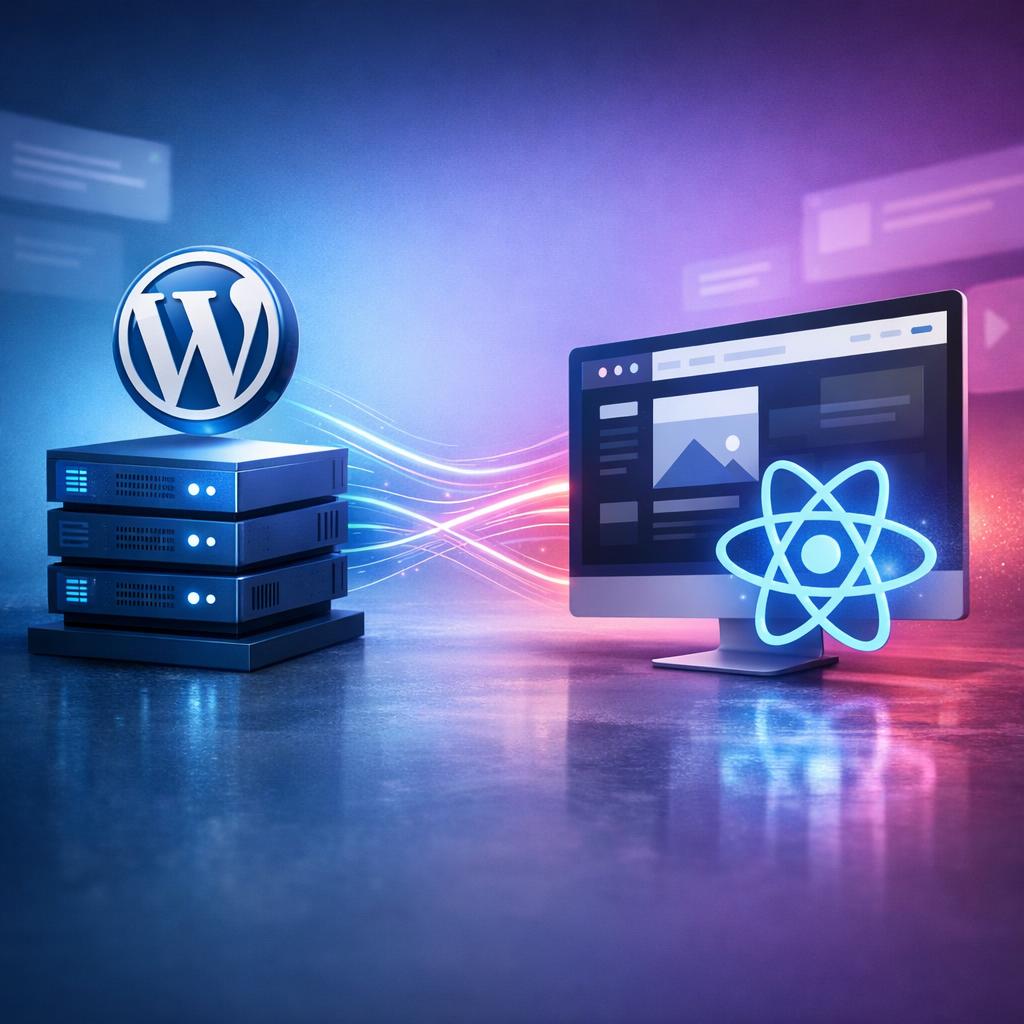
Headless CMS: When WordPress Needs a React Frontend
September 3, 2026
The Evolution Beyond Traditional WordPress Architecture
For over a decade, WordPress has dominated the content management landscape, powering more than 40% of all websites globally. However, as digital experiences become increasingly complex and performance expectations soar, traditional monolithic WordPress architectures are showing their limitations. Enter the headless CMS WordPress approach—a hybrid solution that decouples WordPress’s robust content management backend from modern, lightning-fast frontend frameworks like React and Next.js.
This architectural shift isn’t about abandoning WordPress entirely. Instead, it’s about leveraging WordPress’s strengths—intuitive content editing, extensive plugin ecosystem, and familiar workflows—while addressing its performance bottlenecks through JAMstack architecture. For business owners and decision-makers, understanding when to implement this approach can mean the difference between a competitive digital presence and one that’s struggling to keep pace.
The decoupled approach transforms WordPress into a powerful content API, serving structured data to a React or Next.js frontend that delivers blazing-fast page loads, superior user experiences, and unprecedented scalability. This isn’t theoretical—companies implementing headless WordPress architectures are reporting 5x faster content delivery and dramatic improvements in conversion rates.
When Your Business Actually Needs Headless WordPress
Not every WordPress site requires a React frontend, and implementing headless architecture without strategic justification wastes resources. The decision should be driven by specific business challenges and growth objectives. Understanding these trigger points helps executives make informed investment decisions rather than chasing technological trends.
Consider going headless when you’re experiencing these critical pain points:
- Performance bottlenecks: Your traditional WordPress site struggles to achieve acceptable Core Web Vitals scores despite optimization efforts
- Multi-channel content delivery: You need to serve identical content across web, mobile apps, digital kiosks, and emerging platforms
- Traffic scalability concerns: Your current infrastructure buckles under high-traffic events or seasonal spikes
- Developer velocity: Your development team wants modern JavaScript frameworks and workflows
- Security requirements: You need enhanced security by separating the public-facing frontend from the admin backend
Companies operating in competitive e-commerce spaces, media organizations with high-traffic content, and enterprises requiring omnichannel experiences typically see the strongest ROI from headless CMS WordPress implementations. If your business is generating significant revenue through digital channels, the performance gains alone often justify the transition costs within months.
The JAMstack Performance Advantage
JAMstack architecture—JavaScript, APIs, and Markup—fundamentally reimagines how websites deliver content. Instead of generating pages dynamically on every request like traditional WordPress, a Next.js WordPress integration pre-renders pages at build time and serves them as static files from globally distributed CDNs. This architectural shift eliminates server processing delays and database queries that typically slow traditional WordPress sites.
The performance benefits are measurable and significant. Static files served from edge locations load in milliseconds rather than seconds. React’s component-based architecture enables sophisticated client-side interactivity without sacrificing initial page load speed. Next.js’s incremental static regeneration allows you to update content without full site rebuilds, combining static performance with dynamic content freshness.
From a business perspective, these technical improvements translate directly to revenue impact. Google research shows that a one-second delay in mobile load times can reduce conversions by up to 20%. When implementing decoupled WordPress performance strategies, clients consistently report:
- 40-60% reduction in bounce rates due to faster initial page loads
- 15-25% increases in conversion rates from improved user experience
- 70-80% reduction in server costs through static hosting and CDN delivery
- Near-perfect Lighthouse scores (95-100) across all metrics
These aren’t marginal improvements—they’re transformational changes that impact your bottom line directly.
Implementation Costs and ROI Considerations
Executive decision-makers need realistic cost expectations when evaluating headless WordPress projects. Initial implementation typically costs 2-3x more than traditional WordPress development due to increased architectural complexity, specialized developer expertise, and additional infrastructure requirements. However, this upfront investment must be weighed against long-term operational savings and revenue improvements.
A typical headless WordPress implementation for a mid-sized business includes WordPress API development, custom React or Next.js frontend development, CI/CD pipeline configuration, and hosting infrastructure setup. Depending on complexity, projects range from $30,000 for straightforward implementations to $150,000+ for enterprise-scale solutions with extensive custom functionality.
The ROI calculation should factor in multiple dimensions beyond initial costs. Reduced hosting expenses from static site delivery can save thousands monthly. Improved conversion rates from better performance directly increase revenue. Faster development cycles reduce ongoing maintenance costs. Enhanced security reduces breach risks and associated costs. For most businesses generating over $500,000 annually through digital channels, the ROI typically materializes within 12-18 months.
Organizations exploring custom-engineered WordPress solutions should evaluate whether their specific use case justifies the headless approach or whether strategic optimization of traditional WordPress architecture delivers sufficient performance gains at lower costs.
Real-World Headless WordPress Success Stories
Theory matters less than proven results. Several high-profile organizations have successfully implemented headless CMS WordPress architectures with measurable business impact. TechCrunch migrated to a headless WordPress system using React, reducing page load times by 50% while maintaining their editorial team’s familiar WordPress workflow. The performance improvements directly contributed to increased pageviews and advertising revenue.
A global e-commerce retailer implemented Next.js WordPress integration for their content marketing hub, serving product information and editorial content through WordPress’s REST API to a Next.js frontend. The result was a 5x improvement in Time to First Byte (TTFB) and a 23% increase in organic search traffic due to improved Core Web Vitals scores affecting their search rankings.
These implementations share common success factors: clear business objectives beyond “using new technology,” appropriate budget allocation for both development and ongoing maintenance, and organizational commitment to new workflows. They also typically involve partnering with agencies experienced in both WordPress backend development and modern JavaScript frameworks to navigate the architectural complexity successfully.
Making the Strategic Decision
Headless CMS WordPress represents a powerful architectural approach for businesses facing specific performance, scalability, or multi-channel challenges. However, it’s not a universal solution for every WordPress site. The decision should be driven by concrete business needs, realistic ROI projections, and organizational readiness for more complex infrastructure.
For companies experiencing performance limitations despite optimization, serving content across multiple platforms, or operating in highly competitive digital spaces where milliseconds matter, the headless approach delivers transformational benefits. The upfront investment pays dividends through reduced operational costs, improved conversion rates, and superior user experiences that directly impact revenue.
If you’re evaluating whether your business would benefit from headless WordPress architecture, consider consulting with experts who understand both the technical implementation and business strategy. Comprehensive digital services that combine strategic assessment with technical execution ensure your architecture decisions align with your business objectives rather than simply following technological trends.
The future of content management lies in flexible, performant architectures that adapt to evolving business needs. Whether headless WordPress is right for your organization depends on your specific challenges, resources, and growth trajectory—but understanding the approach ensures you’re making informed decisions about your digital infrastructure investments.