Google Lighthouse 101: Four Pillars That Drive Revenue
March 17, 2026
Why Google Lighthouse Matters to Your Bottom Line
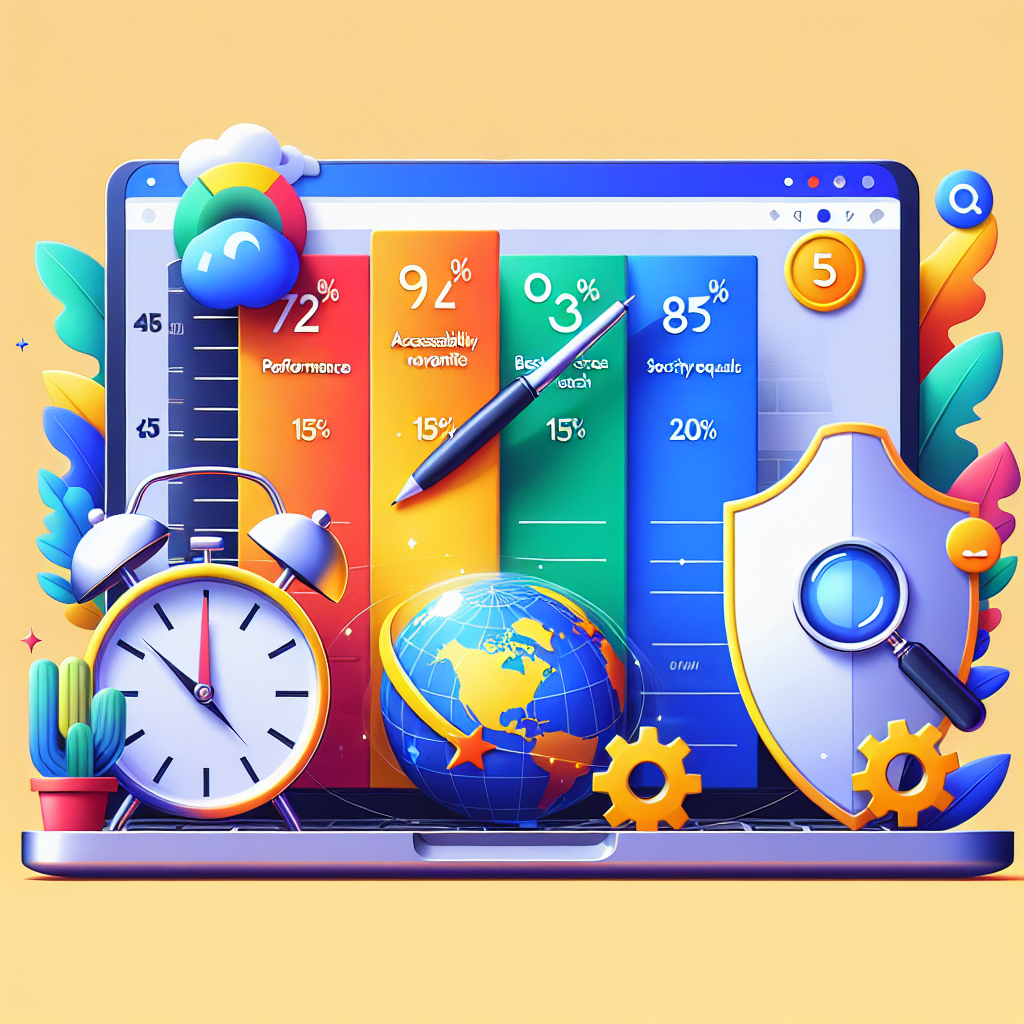
Every second your website takes to load costs you money. Google Lighthouse isn’t just another technical tool—it’s a diagnostic system that reveals exactly why visitors abandon your site, why conversions stall, and why competitors outrank you. This free, open-source auditing tool measures four critical pillars that directly impact your revenue: Performance, Accessibility, Best Practices, and SEO. Understanding these metrics transforms abstract technical concepts into actionable business intelligence that CEOs and marketing directors can leverage for competitive advantage.
Companies with Lighthouse scores above 90 consistently report higher conversion rates, lower bounce rates, and better search rankings. The correlation isn’t coincidental—Google uses these same metrics to determine search visibility, while users subconsciously judge your brand credibility within milliseconds of page load. For decision-makers evaluating digital investments, Lighthouse provides objective benchmarks that separate high-performing digital assets from expensive liabilities. Let’s break down each pillar and its direct impact on your business outcomes.
Performance: Where Speed Translates to Revenue
The Performance pillar measures how quickly your website becomes usable for visitors. Google evaluates three Core Web Vitals that determine user experience: Largest Contentful Paint (LCP), First Input Delay (FID), and Cumulative Layout Shift (CLS). LCP measures loading speed—specifically when your main content becomes visible. Google recommends under 2.5 seconds, but every 100ms delay can decrease conversions by up to 7%. Amazon famously calculated that every 100ms of latency costs them 1% in sales, translating to billions annually.
FID measures interactivity—the time between a user’s first click and your site’s response. Pages with FID under 100ms feel responsive and professional, while delays create frustration that drives visitors to competitors. CLS quantifies visual stability by measuring unexpected layout shifts that cause users to click wrong buttons or lose their place. These seemingly minor annoyances compound into abandoned carts and lost leads. A study by Portent found that sites loading in one second convert three times better than those taking five seconds.
Performance optimization delivers measurable ROI. Reducing load time from 5 seconds to 2 seconds can increase conversion rates by 50-70% across industries. For e-commerce, every second saved adds directly to revenue. For lead generation, faster pages mean more form completions. The performance improvements we implement for clients consistently demonstrate this revenue correlation through before-and-after analytics.
Accessibility: Capturing 15% More Market Share
The Accessibility pillar evaluates whether your website works for all users, including the 15% of the global population with disabilities. This isn’t just about compliance—it’s about market reach and legal risk. Lighthouse checks for WCAG 2.1 standards including proper contrast ratios, keyboard navigation, screen reader compatibility, and semantic HTML structure. Websites failing accessibility standards exclude potential customers and invite lawsuits under the ADA and similar international regulations.
Beyond legal considerations, accessibility improvements benefit all users. High-contrast text helps everyone reading on mobile devices in sunlight. Keyboard navigation assists power users who prefer efficiency. Proper heading structures improve SEO while helping screen readers. Voice search and AI assistants rely on accessible markup to understand your content. Companies like Microsoft and Apple have proven that accessible design creates better experiences universally, not just for disabled users.
The business case is compelling: accessible websites reach broader audiences, rank better in search results, and demonstrate corporate responsibility that enhances brand reputation. WebAIM’s annual analysis shows that 97% of home pages have detectable accessibility failures—meaning most competitors leave this market segment underserved. Fixing these issues provides immediate competitive advantage in both reach and positioning.
Best Practices: Security Equals Trust and Conversion
The Best Practices pillar examines technical health indicators that determine whether users can trust your site. Lighthouse checks for HTTPS encryption, console errors, deprecated APIs, vulnerable JavaScript libraries, and proper image formats. Each failure signals potential security risks or technical debt that undermines user confidence. Browsers now flag non-HTTPS sites as “Not Secure,” immediately destroying credibility before visitors even see your content.
Console errors and deprecated code indicate poor maintenance that often correlates with security vulnerabilities. Outdated JavaScript libraries create attack vectors that hackers actively exploit. Using modern image formats like WebP reduces bandwidth while signaling technical sophistication. These factors combine to create an impression of professionalism—or neglect. Studies show that 84% of users abandon purchases if they don’t trust a site’s security, regardless of product quality or pricing.
For enterprise organizations, Best Practices scores directly impact compliance requirements and insurance costs. Poor scores complicate SOC 2 audits, PCI compliance, and GDPR adherence. Conversely, high scores provide documentation for stakeholders and auditors. The comprehensive digital services approach addresses these technical foundations as business infrastructure, not just IT concerns.
SEO: Visibility Determines Traffic Potential
The SEO pillar evaluates technical factors that enable search engines to crawl, index, and rank your content effectively. Lighthouse checks for mobile-friendliness, meta descriptions, proper heading hierarchy, crawlable links, structured data, and robots.txt configuration. These technical SEO elements determine whether your content even enters the competition for rankings. Google processes over 8.5 billion searches daily—but only properly optimized sites capture that traffic.
Mobile-friendliness isn’t optional when 60% of searches occur on mobile devices. Sites failing mobile usability tests get demoted in mobile search results, effectively invisible to the majority of potential customers. Meta descriptions don’t directly impact rankings but dramatically affect click-through rates from search results. Structured data enables rich snippets that increase visibility and credibility in search results. Each factor compounds to determine your share of organic traffic.
The revenue impact is substantial: organic search drives 53% of all website traffic on average. First-page rankings capture 92% of all clicks, with position one alone receiving 28%. Technical SEO optimization through Lighthouse recommendations provides the foundation that content marketing builds upon. Without this foundation, even brilliant content remains undiscovered. Competitive analysis consistently shows correlation between Lighthouse SEO scores and organic traffic volume.
Implementing Your Lighthouse Optimization Strategy
Running a Lighthouse audit takes minutes—open Chrome DevTools, navigate to the Lighthouse tab, and generate a report. The challenge lies in interpreting results and prioritizing improvements for maximum business impact. Start by auditing your homepage and top conversion paths. Compare scores against direct competitors to identify gaps and opportunities. Document current scores as baseline metrics for measuring improvement ROI.
Prioritize fixes using an effort-impact matrix. Quick wins like image compression and caching configuration deliver immediate Performance improvements with minimal development time. Accessibility fixes often require modest effort but provide substantial market expansion. Best Practices improvements reduce risk and build technical debt reduction into your roadmap. SEO optimizations compound over time as search engines re-crawl and re-index your improved pages.
Establish continuous monitoring rather than one-time fixes. Lighthouse scores degrade as content accumulates and third-party scripts multiply. Monthly audits catch regressions before they impact revenue. Automated monitoring tools can alert teams when scores drop below thresholds. For organizations serious about digital performance, consider partnering with specialists who maintain optimization as an ongoing discipline. The AI-powered automation services can even integrate Lighthouse monitoring into your operational workflows for proactive maintenance.
Turning Metrics Into Competitive Advantage
Google Lighthouse transforms abstract technical performance into quantifiable business metrics that directly correlate with revenue outcomes. The four pillars—Performance, Accessibility, Best Practices, and SEO—aren’t isolated technical concerns but interconnected factors that determine whether your digital presence generates profit or wastes marketing spend. Companies that systematically optimize these metrics consistently outperform competitors in conversion rates, search visibility, and customer satisfaction.
The path forward requires treating Lighthouse scores as business KPIs, not just developer tasks. Establish baseline measurements, set improvement targets tied to revenue goals, and allocate resources proportional to the opportunity. Remember that your competitors are either already optimizing these factors or falling behind—creating opportunities for market leaders to establish decisive advantages. The data is clear: websites scoring above 90 across all four pillars capture disproportionate market share in their categories.
Ready to transform your Lighthouse scores into revenue growth? Discover how strategic optimization delivers measurable results by exploring our performance case studies showing real-world improvements and their business impact. Your digital presence is either an asset generating returns or a liability costing opportunities—Lighthouse reveals which category you occupy.